

Thanks for reading! If you haven’t subscribed, please click the button below:
By subscribing, you’ll join over 75,000 people who read Apricitas!
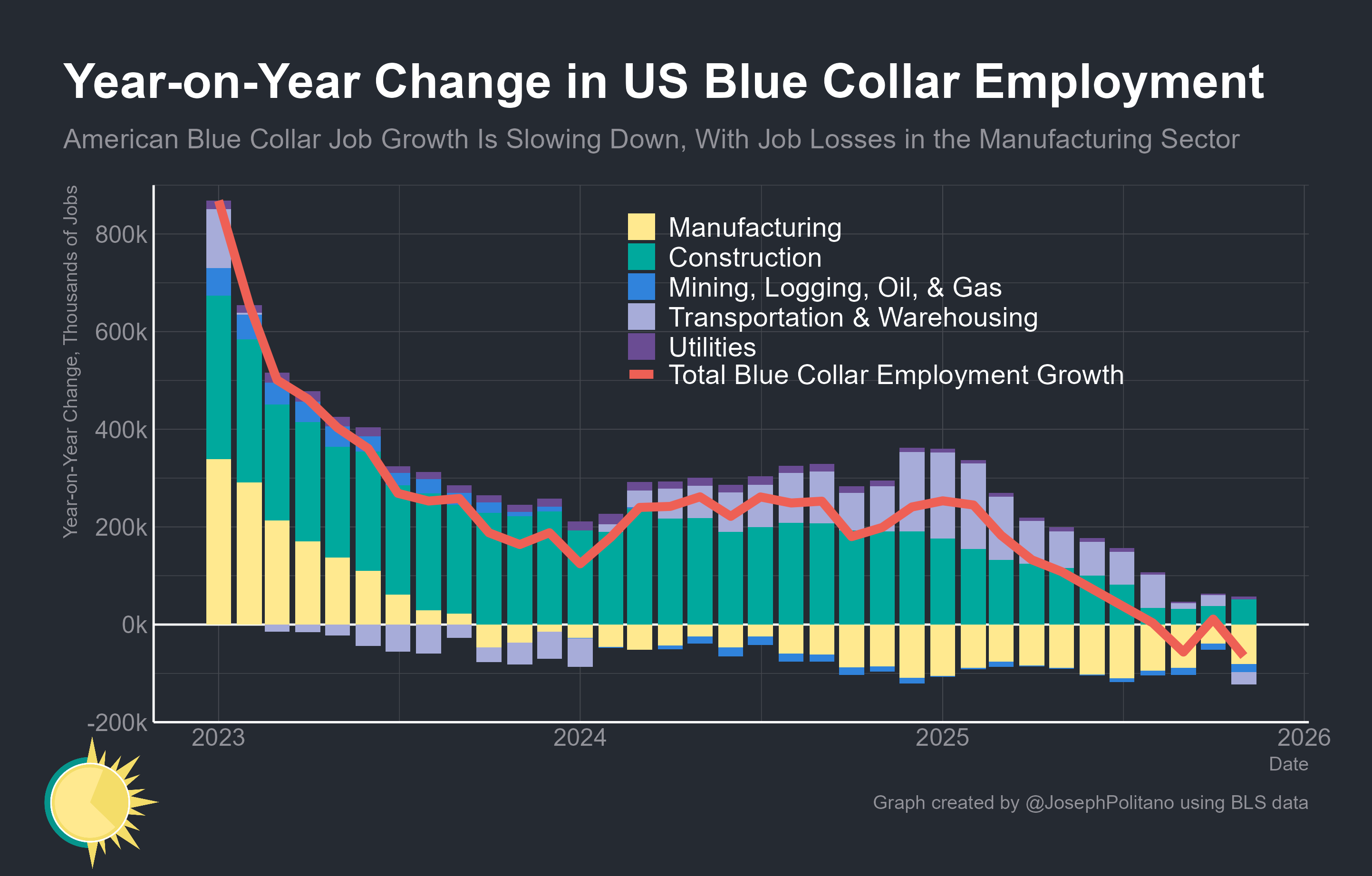
America is losing jobs in blue-collar industries, something that last occurred during the initial shock of the early pandemic and the depths of the Great Recession. The country is down 65k industrial jobs over the last year, a dramatic reversal from 2024, when the US added a lower-than-usual but still respectable 250k jobs. A major slowdown has hit all blue-collar sectors this year, including construction, mining, and utilities—though manufacturing and transportation are driving the vast majority of US job losses.
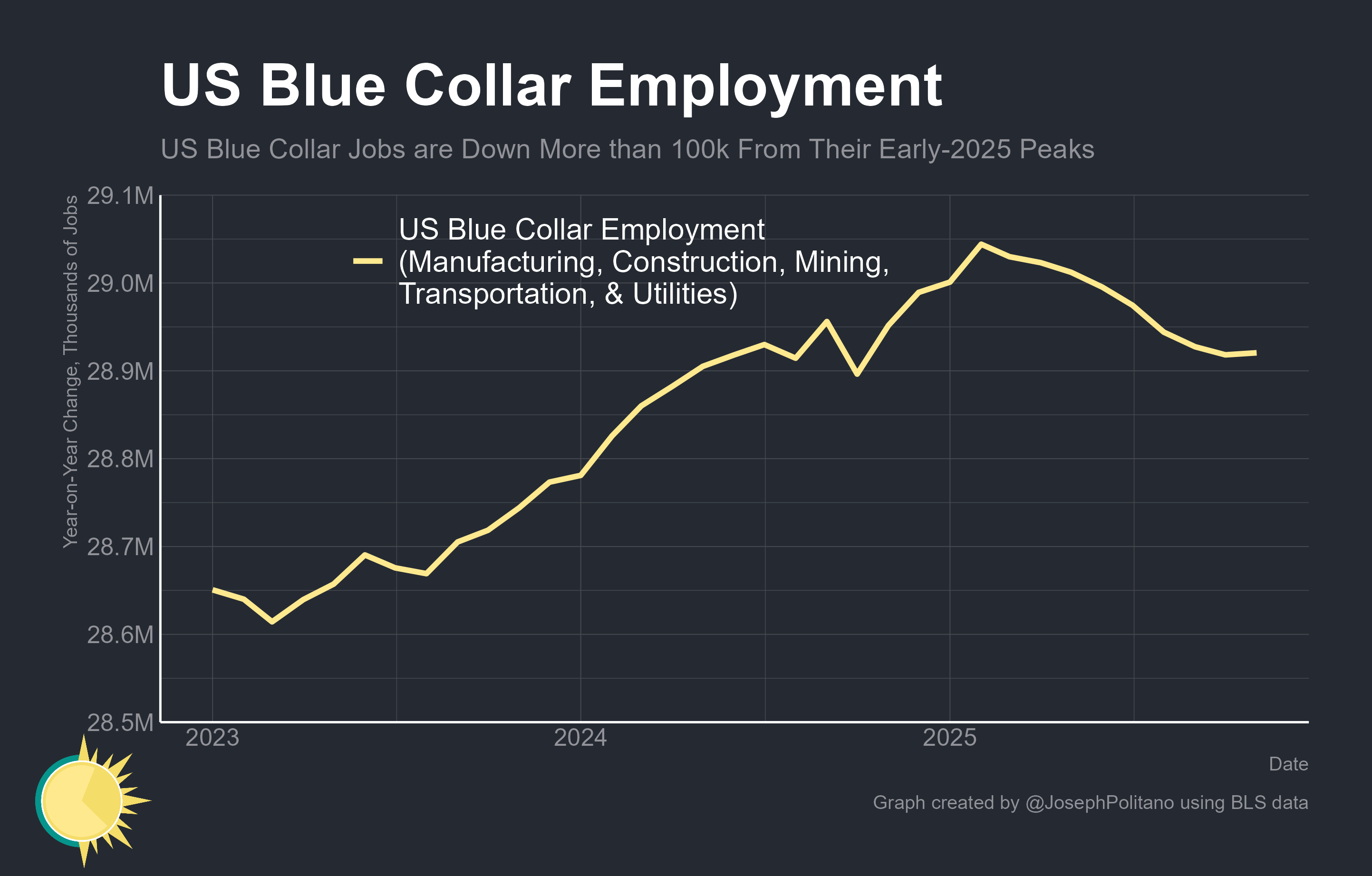
In total, employment across trades and industry is now down 123k from the all-time peak reached in early 2025 and has been declining nearly every month since February. This is likely underselling the damage as well, since preliminary estimates for upcoming annual jobs data revisions suggest an additional loss of 100k manufacturing jobs and 30k construction jobs.
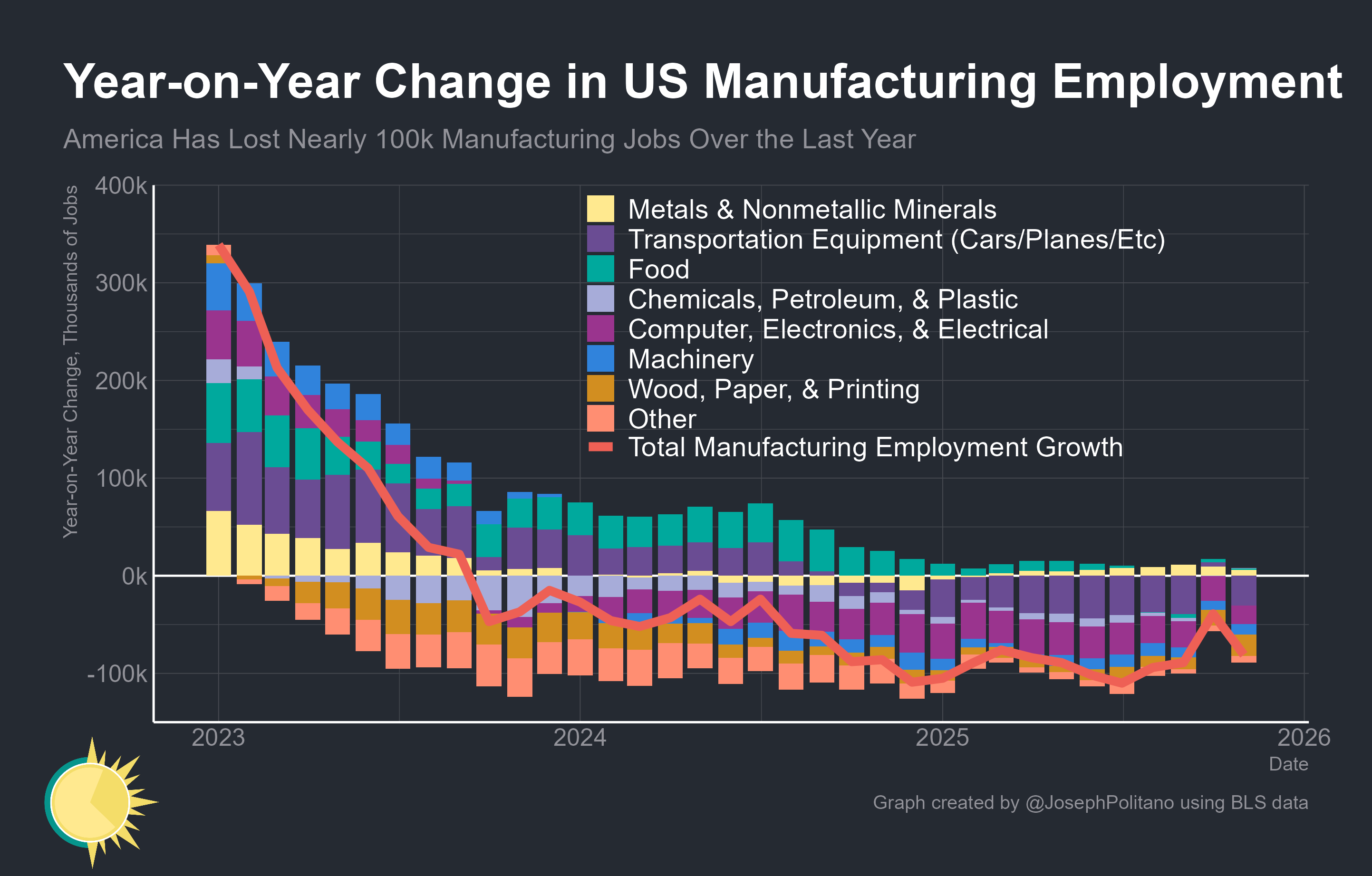
Manufacturing jobs have been suffering the longest, with employment declining for more than two years straight at this point as the sector’s share of the total US workforce shrinks to a record low of less than 8%. Transportation equipment (mostly car manufacturing) and electronics lead the losses, but the decline has been remarkably broad-based, with all major industries except metals & nonmetallic minerals bleeding jobs. In total, the US has now lost more than 200k manufacturing jobs compared to the recent peak in early 2023.
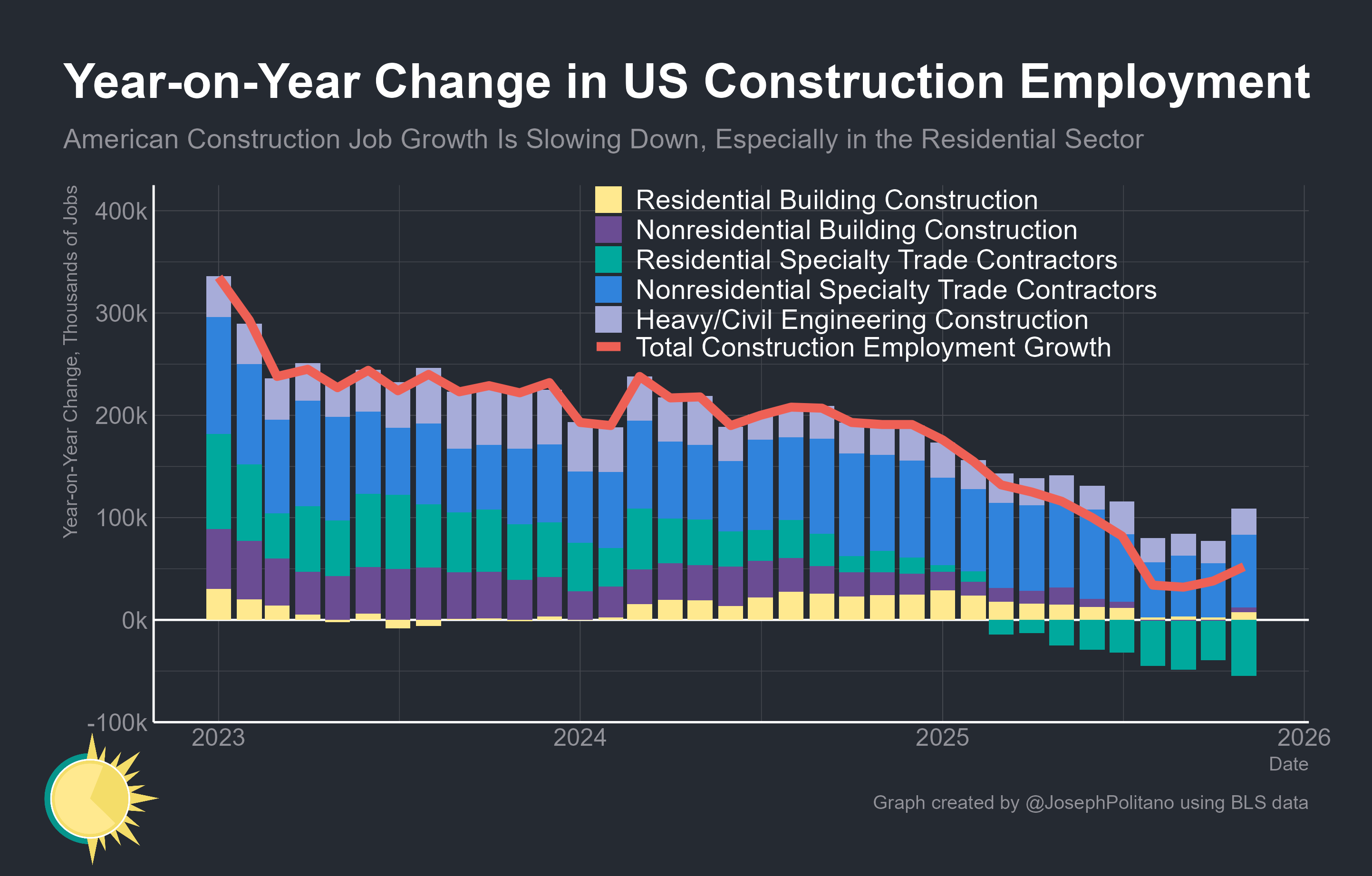
Yet the biggest shift this year has been the rapid decline in construction sector job growth, which has only added 52k jobs over the last twelve months, compared to 191k the twelve months prior. Residential contractors—including plumbers, electricians, roofers, and other specialty workers—have seen by far the most dramatic shift, losing nearly 55k jobs over the last year alone.
The causes of this blue-collar downturn are multifaceted—manufacturing remains in structural decline amidst the slowdown in demand for durable goods and consumer electronics. The early-COVID homebuilding boom has ended as builders finish work on the large number of projects that began in 2021/2022. Employment in oil & gas extraction continues to drop as crude prices sink to the lowest level since 2021. Transportation and warehousing jobs are declining as the trucking sector struggles.
Yet recent federal policy moves have been counterproductive. Tariffs are hurting blue-collar employment by raising the costs of manufacturing inputs. Immigration raids are disproportionately hurting the construction sector. Cuts to industrial policy subsidies have helped push factory construction down more than 8% over the last year. The administration’s desired “blue-collar boom” is not happening; quite the opposite.
